

Pre-sales customer service WeChat


The Internet of Things leads to the tide of investment and the construction of intelligent traffic signs.
Release Time:2012-05-01
The Internet of Things leads a new round of investment. The Ministry of Public Security's "Twelfth Five-Year Plan for Road Traffic Safety" and "Twelfth Five-Year Plan for Road Traffic Technology Development" and other policy support. It is expected that domestic intelligent transportation investment will be 182 billion yuan in the next 10 years. Huge.
It is estimated that in the first quarter of 2012, tens of millions of projects will account for about 50% of the total market size, and the requirements for the company's financial strength, the ability to provide overall solutions, and the ability to follow-up services are increasing. As the support of intelligent transportation technology, the importance of the Internet of things is self-evident.
The 1. Internet of Things is a trillion-level industry and has become a national development strategy.
The Internet of Things is widely used, which can not only improve the efficiency of traditional industries, but also improve the intelligence level of the entire society, reduce social operating costs, and have huge room for future development. It is estimated that by 2020, the number of terminals connected to the Internet of Things will reach 50 billion, and the Internet of Things will become another 1 trillion-level emerging industry in the global information and communication industry. According to Forrester estimates by the US research agency, the value of the Internet of Things industry chain is 30 times larger than that of the Internet, and it will form the next 1 trillion levels of information industry; domestic CCID consultants predict that by 2015, the overall market size of the Internet of Things will reach 750 billion. Compared with the 2010 market size of 200 billion yuan, the annual compound growth rate exceeds 30%. Countries around the world have put forward the development strategy of the Internet of Things. The Internet of Things has become a global development strategy. Countries have put forward development plans. The blueprint for the Internet of Things has become clear, and related technologies and standards are constantly maturing, especially in smart cities, smart grids, smart transportation, and smart security., Intelligent buildings and other fields have carried out substantive planning and pilot construction work.
The Rise of 2. Internet of Things Triggers a New Wave of Intelligent Transportation Investment
Many economists said that with the rise of the new generation of information technology represented by the Internet of things, a new round of investment led by local governments has come. And can the new wave of local investment turn the tide? A war of words over the pros and cons of investment has begun. Some researchers firmly believe that these local stimulus plans have become the backbone of China's economy in the next 20 years, and these local stimulus plans will help the economy rebound. Opponents believe that the huge investment plan that local governments have once again come up with under the smoke bomb of "steady growth" may become a "time bomb".
On August 22, Tianjin initially determined that it would invest 1.5 trillion billion yuan in the next four years to build 10 industrial chains to further expand the city's industrial scale, adjust product structure, and promote industrial agglomeration. The scale of these 10 industrial chains will be expanded from 1.2 trillion yuan now to 4 trillion yuan in 2016, including the petrochemical industry chain and heavy equipment industry chain with a scale of trillion yuan, as well as the automobile industry chain and the Internet of things industry chain.
Guizhou Province is not far behind. The province recently launched the "Guizhou Eco-cultural Tourism Industry Development Plan", which will complete an investment of 3 trillion yuan in the next 10 years. According to the 10-year investment expectation, the government needs to invest 100 billion yuan every year for this plan, which is mainly used for the information construction of infrastructure such as intelligent transportation and intelligent hospitals, and gradually forms the ecology of the Internet of things. In fact, since July, various localities have announced plans to promote investment and growth after the central government's macroeconomic setting of "steady growth.
Application Analysis of 3. Internet of Things Technology in Intelligent Transportation
Imagine that when we are driving on the road and there is a traffic jam ahead, what we want to know most in the car at that time is how long will it take if we continue to wait? Is there a traffic jam if we change to another road, what is the traffic flow, how to go, and how long will it take? These instant messages are not available on traffic signs. How to effectively monitor people, roads and vehicles under the existing road conditions and maximize the efficiency of road utilization has become an urgent task to effectively solve the current traffic congestion problem. I think the effective application of the Internet of things technology in traffic signs will greatly promote the development of intelligent transportation system.
Problems of Traffic Signs and Problems of Traffic Signs Setting with Internet of Things Characteristics
1. The setting of road traffic signs and markings cannot fully reflect their functions
For example, the current information selection method of guide signs cannot meet the needs of the network road traffic system. How to provide high-quality guide and guidance information for the users of the road network under the condition of road network, meet the needs of drivers with different purposes, give full play to the maximum effect of the road network, and fully realize the dredging function of the road network system is a new problem faced by traffic.
2. There is great randomness and blindness in the setting of signs and markings.
In reality, the setting of signs and markings has not been able to think about the setting of signs and markings from the perspective of traffic flow. Some dogmatically apply the old ideas and standards to set them, resulting in many technical defects.
The concept of the Internet of Things is based on the concept of the Internet, which extends and extends its user end to things for information exchange and communication. The core and foundation of "Internet of Things technology" is still "Internet technology", which is a network technology that extends and expands on the basis of Internet technology; its user end extends and expands to any item and between items for information exchange and communication.
The first is comprehensive perception, that is, using RFID, sensors, two-dimensional codes, etc. to obtain the information of objects anytime and anywhere; the second is reliable transmission, through the integration of various telecommunications networks and the Internet, the information of objects is transmitted in real time and accurately; the third is intelligent Processing, using various intelligent computing technologies such as cloud computing and fuzzy recognition to analyze and process massive data and information, and implement intelligent control of objects.
Effect of Internet of Things Technology Applied to Traffic Signs
1, to achieve the external environment adjustment.
The establishment of the Internet of things system, the RFID technology is used for the individual identification of traffic identification, for which a special RFID tag is designed, and combined with wireless sensor network, PC database, car terminal and other construction of RFID management information system, to achieve the effective traceability of traffic identification data and data sharing, so as to achieve the purpose of optimizing the management and maintenance of traffic signs. The application of Internet of Things technology to traffic signs can obtain weather information, such as humidity, rain and fog, sunlight intensity and other information, so as to carry out scientific analysis, automatically trigger relevant behaviors, adjust the reflection angle of the signs, and issue warning signals according to the corresponding weather information. In the past, due to objective reasons, the design, installation and management of traffic signs were very chaotic, and there were many problems. For example, five or six signs were installed on a sign post, and the driver could not read them in a short time. The Internet of Things technology effectively solves such problems, which automatically triggers the most reasonable bans, instructions or warning signs for car owners by monitoring the actual weather, traffic and other conditions.
2. Realize flow control and traffic guidance
In view of the inconvenience caused by information lag, most of the current traffic congestion is not due to the lack of roads or more cars, but to the poor transmission of information on road conditions. On the other hand, even if the information transmission is smooth in some places, the lack of corresponding intelligent applications for information processing is also an important reason. Traffic signs play an important role in the traffic capacity of the road, and the application of the Internet of things technology in traffic signs can realize the flow control intelligently.
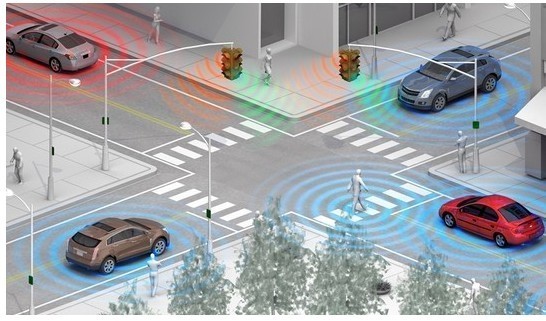
The efficacy of the Internet of Things technology applied to traffic signs The data exchange between traffic signs and car terminals is real-time and two-way. Through various traffic signs, real-time monitoring and collection of road traffic flow information, relevant flow attributes and data information are stored to obtain a traffic flow database. The range of traffic flow monitored mainly includes: the total traffic volume of each import and export of the road section, the traffic volume of different imports to different exports, the traffic volume of each intersection import and export unit time and the traffic volume of unit interval time. By collecting the monitored traffic data flow, the data format conversion and database storage are carried out, so as to establish the traffic flow database of the intelligent transportation system. The database can in turn be used for automatic or manual flow control via traffic signs. For example, when the road is not smooth, the traffic signal lights can obtain real-time information through sensors and adjust the signal lights reasonably by themselves, and the corresponding signs can properly divert this section of the road, so as to achieve the purpose of alleviating road pressure.
The application of the Internet of things technology in traffic signs can also make the relatively independent and fixed individuals form an organic whole and form an effective highway network. Through the traffic sign system, it indicates the traffic condition of the downstream road for the traveler, and allows the traveler to choose the appropriate driving road, which not only provides the travel guidance service for the traveler, but also adjusts the distribution of traffic flow and improves the traffic condition. The intelligent traffic guidance function also needs to be able to receive the query function from the vehicle-mounted terminal, locate the vehicle according to RFID, GPS, etc., and provide the traveler with a route that can avoid traffic congestion, reduce delays and reach the destination efficiently according to the location of the vehicle in the network and the destination input by the traveler, combined with the road network traffic information transmitted by the traffic data acquisition subsystem. A map of the road network in front of the vehicle is provided on the vehicle terminal, and the recommended optimal driving route is indicated by arrows.
3. Easy to maintain and manage
At present, it is difficult to maintain in the management of traffic signs, especially in rural road signs, such as being scratched, bent by vehicles, aging, falling off or poor reflective effect. However, RFID tags can accurately locate the corresponding traffic signs, and can also be set by programs to send maintenance requests when traffic signs are damaged, which is convenient for the management of highway management departments and can archive all maintenance information for future retrieval and analysis.
As an emerging industry, the Internet of Things technology has been officially listed as one of the five emerging strategic industries in the country and included in the 12th Five-Year Plan. The Internet of Things has received great attention from the whole society in China, and its degree of attention in China is unmatched in the United States, the European Union and other countries.
The Internet of things is the use of a variety of information sensing equipment to connect objects to each other, to achieve any time, any place, any object of intelligent identification, information exchange and management. It is used in traffic signs, with many advantages:(l) real-time, accurate and comprehensive data collection;(2) flow control and traffic guidance;(3) path identification and historical path backtracking;(4) easy to mark line maintenance. The Internet of Things technology is an opportunity for the application of transportation systems, and the development of Internet of Things technology will also have a profound impact on the future of modern transportation.
Focus on us
Official Account
Pre Sales
After Sales
National Service Hotline
Complaint suggestion:+86 13530144755
Enterprise E-mail:wanglili@xingyongli.com
Links:Shenzhen Hongxing Yongli Electronic Technology Co., Ltd.(Apply for friend chain plus QQ:2355671558)
©2024 Shenzhen Hongxing Yongli Electronic Technology Co., Ltd Powered by www.300.cn