

Pre-sales customer service WeChat


China's RFID market is worse than Europe and the United States where?
Release Time:2016-06-01
RFID is a radio frequency identification technology, is a very popular communication technology, through radio signals to identify specific targets and read and write related data. RFID readers are also divided into mobile and fixed. At present, RFID technology is widely used, such as libraries, access control systems, food safety traceability, etc.
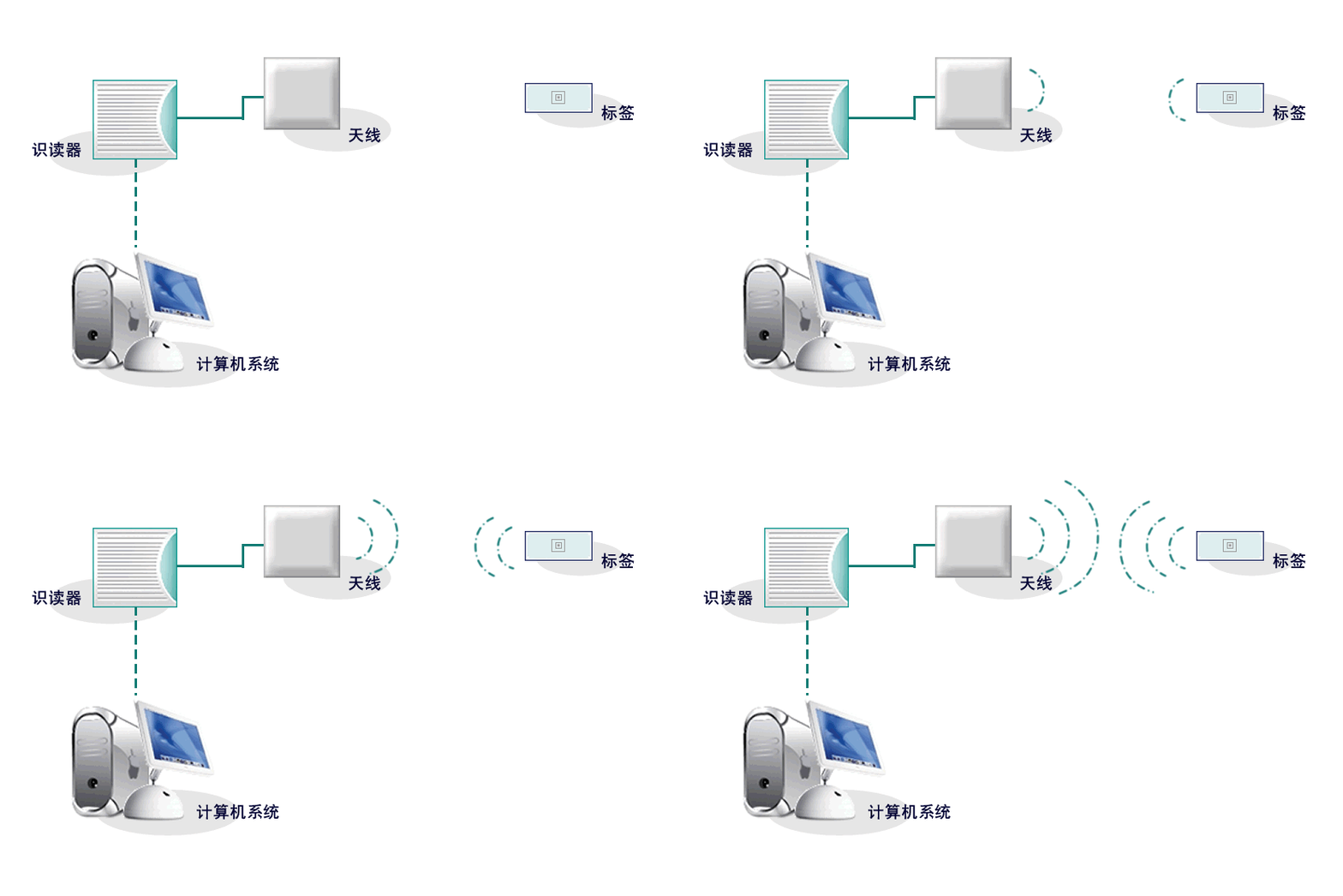
RFID Technology Worldwide:
At present, the global RFID industry is mainly concentrated in the European and American markets, and its RFID technology application is also more mature, accounting for nearly 70% of the global market in 2015.
In contrast, China is in the exploration stage of RFID, and has not yet developed mature standards and technologies, resulting in a gradual decrease in market penetration. In the future, with the progress of RFID standards, technological breakthroughs, label cost reduction and the progress of intelligent Internet of things industry, China's RFID market is expected to grow at an annual growth rate of 20% between 2016 and 2020.
RFID Technology in China
In terms of RFID tags, China has become the world's largest production base, accounting for more than 70% of the global total.
In 2015, China's RFID market was about 3 billion billion yuan, 90% of which came from passive RFID. However, in contrast, active RFID has the advantages of long-distance identification, massive data transmission, low transmission power, and superior reliability and compatibility.
China's RFID market is worse than Europe and the United States where?
1.RFID in the Chinese market is still in its infancy;
(2) its cost is higher;
3. Delays in the formulation of national standards;
4. High cost of infrastructure renewal;
5. Finally, the technology has not yet reached maturity.
In the future, with the transformation and upgrading of traditional industries, RFID technology is expected to achieve unprecedented development in the fields of food safety tracking, intelligent transportation, intelligent manufacturing and clothing retail.
Focus on us
Official Account
Pre Sales
After Sales
National Service Hotline
Complaint suggestion:+86 13530144755
Enterprise E-mail:wanglili@xingyongli.com
Links:Shenzhen Hongxing Yongli Electronic Technology Co., Ltd.(Apply for friend chain plus QQ:2355671558)
©2024 Shenzhen Hongxing Yongli Electronic Technology Co., Ltd Powered by www.300.cn