

Pre-sales customer service WeChat


RFID Data Collector Technology for School Dormitory Attendance Management
Release Time:2014-06-11
With the development of RFID data collector technology, more and more schools put into use dormitory attendance management RFID data collector technology.
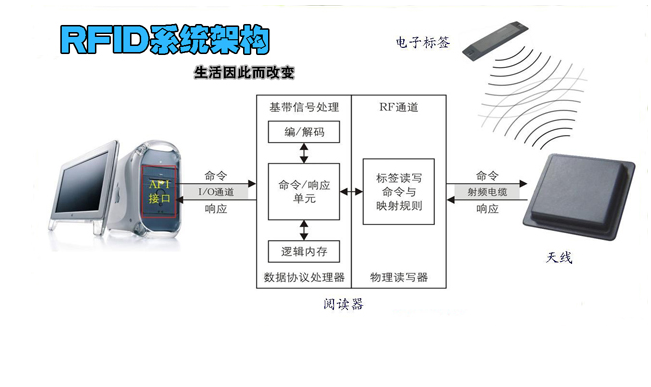
Technical Brief
By placing barrier-free access at the entrance of the dormitory building (due to the fire protection requirements of the dormitory/apartment, the gate is generally not used.) To check the attendance of the personnel entering and leaving, and at the same time, to jointly play the safe environment of the student dormitory/apartment with various management methods such as video surveillance and access control. At present, in the application of RFID technology, it is roughly divided into low frequency, high frequency close range, high frequency long distance and other different technologies according to different frequency bands. And each technology category is also different in application according to its own characteristics. The following is a summary of the application of each technology in dormitories/apartments and the advantages and disadvantages.
1. low frequency
The operating frequency of the low-frequency RFID data collector is 125KHZ and 134KHz. Students wearing cards can automatically read information through the channel, and the placement distance of the low-frequency channel is about 80cm. The advantage of the low-frequency RFID data collector is that the low frequency is basically not affected by water and liquid, and the tag worn by the human body will not affect the reading effect of the channel on the card. Can be carried out without card personnel alarm. In this way, it can be prevented for students who do not have a card to enter or outsiders to enter the campus. In addition, low-frequency RFID tags are cheaper and the cost investment is relatively small. Affected by its technical characteristics, the speed of low-frequency channel personnel is not ideal. The main reason is that the low-frequency channel cannot support simultaneous reading of multiple tags, so only one person is allowed to pass through the channel at a time, which obviously cannot meet the needs of the dormitory during the morning, middle and evening peak periods. In addition, the low frequency is not easy to be incorporated into the existing university card platform.
2. high frequency close range
The frequency band of the high-frequency RFID data collector is 13.56Mhz, which is divided into two types, one of which is a short-range 14443 protocol. The reading distance of this technology is 2-10cm, and the high-frequency close-range card is very common in colleges and universities. Due to its good security and confidentiality, such cards are usually used in colleges and universities for consumption, which is the most commonly used card in colleges and universities. Its card information leakage rate is the smallest of all technologies, almost 100 percent read.
However, high-frequency proximity is not very applicable in the management of dormitories/apartments. The most important thing is the speed of traffic. Due to the need for students to actively close to the equipment to swipe the card to read, the traffic speed is very slow, which is even lower than the low-frequency RFID traffic efficiency. Some schools also use a high-frequency close-range attendance machine hanging on the wall at the entrance and exit of the apartment, giving up the use of the passage. In this way to improve the efficiency of traffic, once so, it is impossible to alarm people without cards. Due to the natural inertia of people, many students are not willing to take out cards to brush when entering and leaving. Then, the safety management of the dormitory will be useless.
Focus on us
Official Account
Pre Sales
After Sales
National Service Hotline
Complaint suggestion:+86 13530144755
Enterprise E-mail:wanglili@xingyongli.com
Links:Shenzhen Hongxing Yongli Electronic Technology Co., Ltd.(Apply for friend chain plus QQ:2355671558)
©2024 Shenzhen Hongxing Yongli Electronic Technology Co., Ltd Powered by www.300.cn