

Pre-sales customer service WeChat


There are three common misunderstandings of barcode scanner decoding technology.
Release Time:2015-06-18
When companies want to choose the most sophisticated technology to simplify their business applications. Many misunderstandings are often encountered when improving application efficiency and reducing operating costs. There are three common misunderstandings of barcode scanner decoding technology:
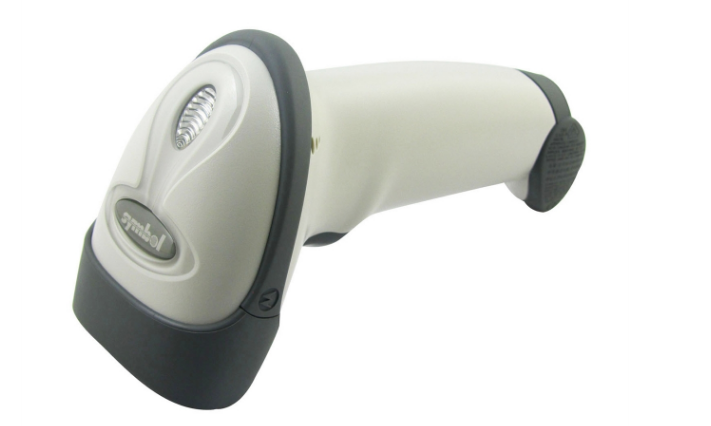
Handheld Wireless Barcode Scanner
Common Myth 1: Digital Imaging vs. Laser Scanning-The former is more reliable than the latter (or vice versa)
When it comes to data acquisition technology, manufacturers of digital imagers or laser barcode scanners often advertise that their technology is more reliable, but should carefully analyze their data acquisition environment and then determine which method best suits their needs.
Today's high-performance laser barcode scanners use wear-resistant components and have a lifetime warranty due to their high reliability. The digital imager uses a solid-state structure, no moving parts, so its reliability can not be underestimated. In the retail industry, you often see many digital imagers or laser barcode scanners that have been in use for 10 to 15 years, working as efficiently as ever.
So in the choice of data collection technology, remember to carry out careful in-depth online analysis, determine the current and future needs of enterprises and consult the relevant experts. Thoughtful planning will help improve application efficiency and employee productivity.
Common Myth 2: Linear Devices Support Imaging
Although linear devices such as CCD charge-coupled devices are often referred to as "linear imagers", this term is inappropriate and lurks people into thinking that these devices have imaging capabilities.
The linear device uses a CCD or CMOS sensor and processes bar code information in the same way as the area type imager. Whereas a linear imager uses a sensor to collect a small strip (I. e., a row of pixels) of information in an image, an area imager uses a sensor to collect pixels (rows) arranged in a two-dimensional grid. The linear imager can thus decode a one-dimensional barcode, but does not generate an image for other purposes.
Common Myth 3: MEMS scanners perform better than other laser scanners
It is often mistaken that MEMS-based scanners perform better than other laser scanners because they replace a single design element (scanner). This new component makes this type of barcode scanner a wear-resistant scanning system. Although we all know that wear-resistant means more reliable, other types of wear-resistant scanners have been on the market for many years.
In addition, it is important to keep in mind that in a complex laser scanner system, there are many factors that affect performance. While simply replacing the scanner can increase the scanning speed, it does not provide the excellent scanning performance expected by the majority of users. In fact, increasing the scanning speed will reduce the signal quality, which often leads to a reduction in the working range and reduces the decoding performance of the scanner for low-quality barcodes, thus offsetting the advantages brought by the increase in speed. In addition, sensitivity to bright ambient light further degrades the signal quality of the MEMS barcode scanner.
To balance these negative effects and achieve the desired operating range, the MEMS scanning engine must increase the size of its optical device, thus requiring a larger engine. However, the size of the engine is a key factor affecting the ergonomic design of the scanning device. The smaller the engine, the more convenient it is to optimize the housing design. The MEMS engine does not meet this requirement.
Focus on us
Official Account
Pre Sales
After Sales
National Service Hotline
Complaint suggestion:+86 13530144755
Enterprise E-mail:wanglili@xingyongli.com
Links:Shenzhen Hongxing Yongli Electronic Technology Co., Ltd.(Apply for friend chain plus QQ:2355671558)
©2024 Shenzhen Hongxing Yongli Electronic Technology Co., Ltd Powered by www.300.cn