

Pre-sales customer service WeChat


Library application bar code scanner management advantages
Release Time:2014-06-12
As we all know, the library is a place with a lot of product categories, and it seems impossible to artificially remember the location of each book. Therefore, the library application bar code scanner management advantages, mainly in the following aspects.
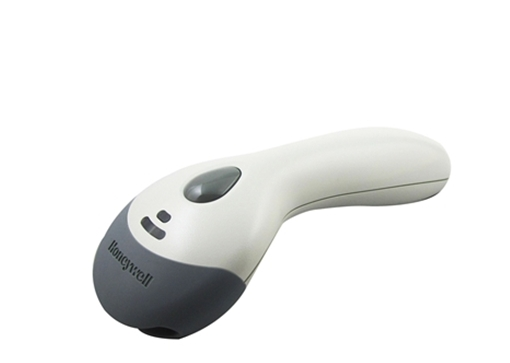
Library special bar code scanner
Positioning function:
The one-to-one correspondence between bar code and books, bar code and reader's borrowing card makes bar code unique. When each book and reader's borrowing card are given a unique and specific bar code identification, it has the function of positioning. Therefore, book circulation inquiry management and reader management are very convenient and accurate.
Asset Management:
In addition to lending books, the Library provides other services, including the lending of computers, conference rooms and other assets. Without barcode data capture, finding the location and/or status of a book, conference room, or any item that is movable within a library facility can take a significant amount of time. Barcode scanners can greatly improve asset tracking capabilities and personnel productivity, enabling employees to respond quickly to inquiries and optimization changes.
Inventory Management:
Barcode scanning guns and/or mobile computers are key components of any cost-saving inventory management system in libraries. Using ISBN numbers encoded in bar codes or other library codes to track books, music, magazines, etc., libraries can easily manage reliable and accurate databases and reflect the latest availability of book materials in the system. The collected data may be uploaded to the central computer system periodically in batches or in real time. This can improve forecasting and reduce out-of-stock, pressure and emergency shipments to improve customer service.
Library card bar code:
Through the "reader management" system in the circulation subsystem of the library automation management system, a series of complete borrowing files such as card number, name, reader type, unit, circulation level, etc. can be established for each reader, and the corresponding bar code is pasted on the plastic library card, so that the reader's library card number is unique. In this way, the circulation of books, the reader's borrowing situation and authority to do a clear and correct, the reader's library card inquiry, loss reporting convenient and fast, eliminating the manual operation of many cumbersome processes.
The library management system has been using bar codes, and even developed a standard marking procedure, from which also gained a lot of benefits.
System Introduction: Libraries usually assign a unique (coded) number to each item in circulation, which is linked to databases and bibliographic records. This allows employees to easily track items and see their location at any time. Typically, small databases (I. e., fewer than 10,000 records) or public libraries with multiple copies and non-specific cataloging numbers use "universal labels". "Smart tags" can be employed to save more cost and time. Items are tagged prior to circulation, pre-assigned an International Standard Book Number (ISBN)(I. e., a unique digital business book identifier) by the computer, and automatically connected to the database to avoid all manual assignment tasks. The content of the smart label includes details such as bookshelf arrangement to improve work efficiency. The system is currently used by most academic and functional libraries whose classifications use specific book cataloging numbers and/or most books have only one copy.
Focus on us
Official Account
Pre Sales
After Sales
National Service Hotline
Complaint suggestion:+86 13530144755
Enterprise E-mail:wanglili@xingyongli.com
Links:Shenzhen Hongxing Yongli Electronic Technology Co., Ltd.(Apply for friend chain plus QQ:2355671558)
©2024 Shenzhen Hongxing Yongli Electronic Technology Co., Ltd Powered by www.300.cn